
GLP-1 receptor agonist medications are everywhere right now — Ozempic, Wegovy, Mounjaro, Zepbound — and everyone has an opinion. But beneath the headlines and TikTok clips and judgment, there is a real conversation about metabolic health, insulin resistance, and how they may be a helpful tool for women after breast cancer.
If you’re searching for answers about GLP-1 medications, Zepbound cost without insurance, or whether GLP-1 medications are safe after breast cancer, you’re not alone. These medications are increasingly prescribed for weight management and metabolic health, but for breast cancer survivors and women navigating hormone therapy, postpartum changes, and shifting metabolism, this decision requires nuance.
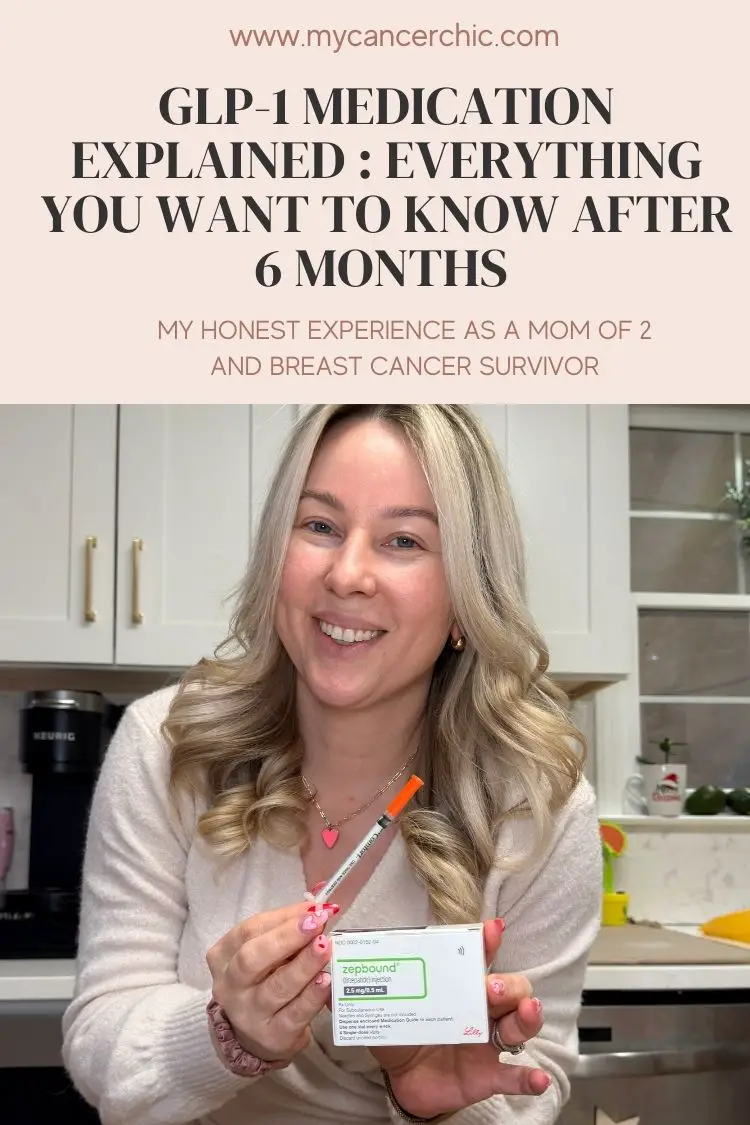
As a 10-year breast cancer survivor navigating hormone therapy and postpartum metabolic changes, I approached GLP-1 medication skeptically. In this guide, I’ll explain how GLP-1 medications work, what the research says about safety, how insurance and Lily Direct manufacture pricing can be navigated, and what my real-life experience on Zepbound has looked like over the last 6 months.
DISCLAIMER: This is not medical advice. I am sharing my lived experience and science-based information. It is important to consult a medical professional before making medical decisions about GLP-1s.
What Are GLP-1 Medications & How Do They Work?
GLP-1 receptor agonist is the clinical term (you’ll often hear people casually say “GLPs or GLP-1s”), and it stands for glucagon-like peptide-1, a hormone naturally produced in the gut. These medications are not artificial hormones. They mimic and prolong the activity of our natural GLP-1 hormone. Tirzepatide (Zepbound), which I am on, is a dual GIP and GLP-1 receptor agonist, meaning it works on both pathways. You can think of it as keeping the hormone “faucet” on longer — instead of being broken down in minutes, its effects last for days. This helps regulate blood sugar, improve insulin sensitivity, slow gastric emptying, and influence appetite signaling in the brain (often referred to as “food noise”).
Common GLP-1 receptor agonists include Ozempic, Wegovy, Mounjaro, and Zepbound. There are also compounded options available, but these are not FDA-approved, and some doctors will not support compounded prescriptions.
Thank you to my friend Annelise who is an NP for fact-checking this information and helping explain the science
Who Is a Candidate for GLP-1 Medications?
GLP-1 medications for weight management are generally prescribed for individuals with a BMI of 30 or higher, or 27 and above with weight-related conditions such as hypertension or type 2 diabetes. With the increased use of GLP-1 medications for benefits beyond weight loss, we are seeing less coverage by insurance. For people considering a GLP-1 medication, it’s important to consider metabolic health markers, insulin resistance, hormone changes, and overall health goals to make an informed decision.
GLP-1 medications carry a black box warning for individuals with a personal or family history of medullary thyroid carcinoma (MTC) or Multiple Endocrine Neoplasia syndrome type 2 (MEN2), based on preclinical rodent studies. If this is a part of your medical history, be sure to review with your care team.
GLP-1 Medication Side Effects and Safety Considerations
Common side effects of GLP-1 medications include nausea, constipation, diarrhea, bloating, and fatigue, particularly during dose escalation (also called titration). More serious but rare risks include pancreatitis and gallbladder issues. It’s important to discuss your medical history in depth with a medical provider to ensure a GLP-1 is safe for you. As a breast cancer survivor, I wanted to be very thorough about this research.
Who Prescribes GLP-1 Medication?
Many types of providers can prescribe GLP-1 medications, but it is most commonly prescribed by a primary care provider or a weight-loss clinic provider. Oncologists do not generally prescribe GLP-1 medications, but they are a great place to start the conversation if you are looking to get their perspective and buy-in on use. In my case, I did talk to my oncologist about GLP-1 options, and she was super supportive. Then I went through my PCP for lab work to inform my decision andlater my prescription.
ONLINE GLP-1 PHARMACY WARNING ⚠️
Many online pharmacies that prescribe GLP-1 microdosing and related compounds may not screen your medical history, which can result in problematic compounding or medicine offerings. As a breast cancer survivor, it is extremely important to go through a provider who thoroughly reviews your medical history and understands the contraindications related to cancer medication and history.
Zepbound Cost With & Without Insurance
Insurance coverage for GLP-1 medications varies widely. Many plans restrict approval to patients with type 2 diabetes, and prior authorization is often required. In my case, while I was on the cusp of qualifying for insurance coverage in terms of my BMI, elevated A1C, and cholesterol, they would not approve coverage unless I tried other appetite suppressant drugs first. After consulting my care team and learning about the intense side effects related to those drugs, I decided to proceed without insurance coverage and pay out of pocket.
When my insurance denied coverage for Zepbound, I accessed the medication through Lily Direct, a manufacturer program offered by Eli Lily. Paying for Zepbound without insurance can cost several hundred to over a thousand dollars per month, depending on dosage and pharmacy. I have found the Lily Direct option to be the cheapest on the market for Zepbound. I pay $300/month for the 2.5mg dose and $400 for the 5mg dose.
The financial aspect of GLP-1 medication is an important part of the decision-making process. It is also worth noting the financial inequity in access to GLP-1 medications. As we continue to see widespread benefits, it is disappointing that cost may prevent many patients from accessing the drugs. I hope more cost-effective options emerge.
As of when this post goes live, Novo Nordisk just released their semaglutide pill, which will be significantly less than the injections (around $125/month). Unlike the injections, which are once a week, the daily pull is meant. tobe taken 60 mins before eating or drinking. I am curious to learn more about this option as a more cost-effective option.
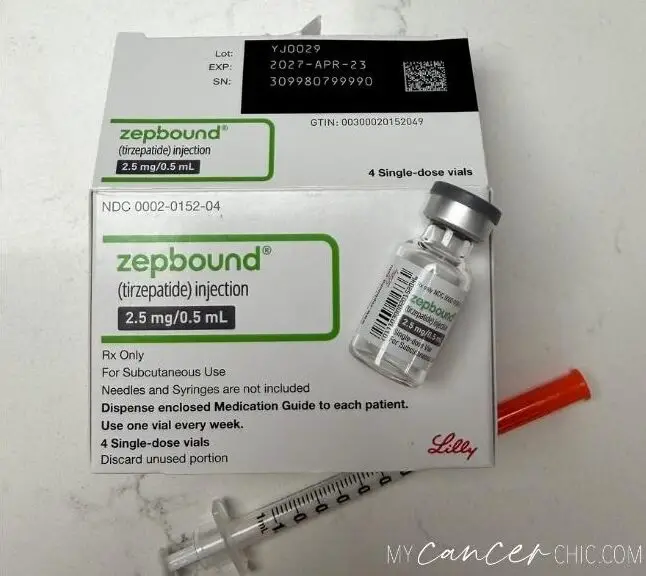
My Experience Choosing to Start Zepbound
After almost 8 years on hormone-blocking medication (known to cause weight gain), medical menopause, and having two children, I was struggling to maintain a healthy weight. I was doing all the “right things” – eating a balanced diet, exercising and prioritizing protein intake (100g+ daily), fiber (25–30g daily), but I kept gaining weight and didn’t feel like myself in my body.
After being judgmental and skeptical about GLP-1 Medications for a few years, I finally decided to get my lab work done and start a conversation with my provider to determine if it could be a helpful tool. I was scared that going on a GLP-1 would ruin years of body acceptance work and anti-diet cultural shifts (learn more about that journey here), but I was thrilled to find this wasn’t the case. The shift away from thinking about food so much actually helped with my body image, and I was still able to eat without restriction and maintain healthy eating habits. It’s been a truly life-altering experience.
My Experience on Zepbound (by month)
Check out My Full GLP -1 Highlight on Instagram
When I first started Zepbound, I was VERY nervous about the nausea and side effects. It’s hard to understand what food noise is and your overall appetite habits until you’re on these medications. Before starting, I talked to a lot of friends about the medication and gathered insight to help me prepare. I think it’s important to remember, though, that everyone’s experience will beunique. Some people will experience stronger side effects or fewer, and the important part is to listen to your body
Month 1 Experience on Zepbound
I started my Zepbound at the 2.5mg dose, which is the lowest dose. Within 24 hours of my first shot, I started feeling the impacts. The food noise quieting was the biggest shock. After 38 years of struggling with overeating and struggling to manage my fullness cues, I found the medication helped me immensely. More on my intuitive eating journey here. On Zepbound, I was still hungry, able to fuel my body with nutrients, but my body told me when I was full more clearly. I was easily able to walk away from the plate. I stopped snacking mindlessly and thought about food less overall. It was absolutely freeing!
The other amazing benefit I found in the first month on Zepbound was that my GI issues resolved. For many many years (even before breast cancer) I had GI challenges that were never diagnosable. I would feel bloating, gas pain, and other discomfort after many meals and would wake up feeling the discomfort despite regular bowel movements. Within 2 weeks of starting the GLP-1 Medication, it was completely gone, and now, 6 months later, it’s one of my favorite benefits!
Side Effects & Results Month 1 on Zepbound
- Mild nausea in 48 hours following my injections
- Slow and steady weight loss ~1 lb a week
Month 2 – 3 Experience on Zepbound
I really got in a groove in months 2-3. I knew how to manage my appetite and was consistent with protein and fiber intake. I was working diligently to increase strength training to maintain muscle mass and increase water intake. It also felt really great to finally see weight loss progress and metabolic improvements after being frustrated for so long!
Side Effects & Results Month 2 – 3 on Zepbound
- Mild nausea in 48 hours following my injections
- Slow and steady weight loss ~1 lb a week – I found by the end of month 3 I was not losing regularly. and decided to increase the dose.
Month 4-5 Experience on Zepbound
I decided to go up to the 5mg dose, and this shift was very difficult! I was so comfortable on the 2.5mg I was not prepared for the increased side effects on the 5mg. I will mention more below but being on the 5mg turned out to be an unhealthy space for me!
Side Effects & Results Month 4 – 5 on Zepbound
- Stronger nausea
- Steady weight loss
- Minimal appetite – struggling to eat enough and stay fueled
- Increased fatigue – likely due to not eating enough
- Constipation for an extended period of time following the injection. This lasted for a good 3-4 weeks after the concentration went up.
Month 6 Experience on Zepbound
After a really rough mental health period around the holidays, I went in for a physical in January, as part of my overall health review, we decided the 5mg dose was not good for me. I was not eating enough, I was exhausted, and all of it was impacting my mental health.
I will also share transparently that in the 2 months prior, I had fallen into old bad habits of focusing more on weight loss and less on overall health, and I knew I didn’t want to continue that. We decided to go back to my 2.5mg dose, and in the 5-6 weeks since that change, I have feel 100% better. I am back to eating well, fueling my body, and focusing on strength training. My goal now is to find a happy final weight range and solidify my healthy habits and long-term routines. My goal is to eventually go down to a microdose level to maintain the food noise control, or maybe go off fully at the one-year mark.
Watch this GLP-1 I made about my eating red flags.
Side Effects & Results Month 6 on Zepbound
- Food noise is under control
- Eating enough. tostay strong and energized
- Hungry but not overeating
- Minimal to no weight loss.
Watch this video on how to properly inject and pull the right amount of medication (don’t make my mistake!)
Protecting Muscle Mass While on GLP-1 Medications
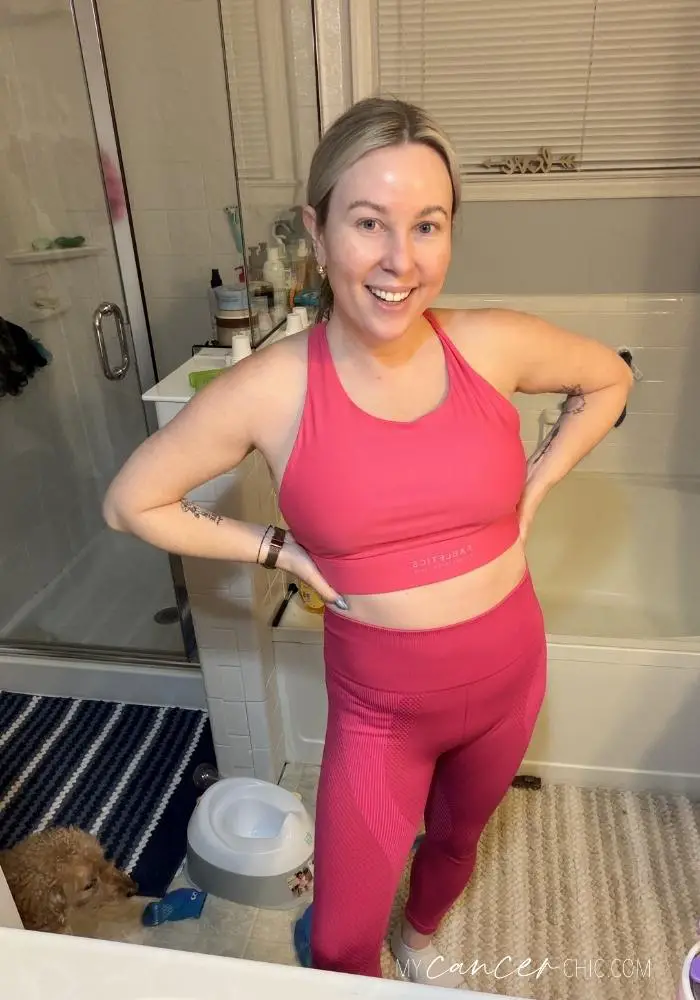
Because GLP-1 medications reduce appetite, adequate protein intake and resistance training are essential to preserve lean muscle mass. My friend Annelise suggested spreading protein goals across 3-4 meals a day rather than trying to eat it all at once. This maximizes muscle protein synthesis. When thinking about protein, she shared that high-quality animal protein is much more efficient than plant protein because of its leucine content. Dairy, eggs, meat, poultry, and fish are more effective for building muscle mass. Lastly, middle-aged and older adults may have a blunted anabolic response to protein, so it’s especially important to increase protein intake further in patients over 40. Generally, she recommends at least 1.6-2.4 g/kg body weight/ day.
Maintaining this high level of protein daily (I aim for 100G) took me a few months to get the hang of (due to reduced appetite). I find it really helpful to maintain an ongoing chat with my ChatGPT about what I am eating, how I am progressing towards daily goals, and how I am feeling. It also helps me stay focused on health and not get too sucked into weight loss rhetoric.
In addition to the protein goals, weight training is extremely important. When I started on Zepbound I was working out once a week with my personal trainer via Zoom and we did weights. That worked great, but I was struggling to stick to my schedule. In the new year, I joined the YMCA and have loved going to group weight-lifting classes, as well as starting my own weight-lifting routine for days when I go solo or with a friend. I made my own weight-lifting routine on ChatGPT (thanks to my friend Joanna’s suggestion) and now track my weight and reps each time so I can challenge myself to increase the weight. I am feeling super strong now, which is the biggest win for me!
High Protein Foods & Snacks on Zepbound
- Fairlife protein shakes
- Chike protein powder (MYCANCERCHIC for discount) – espresso + protein
- Elevatation Protein Bars (ALDI)
- Greek Yogurt
- Salmon (raw in sushi or air-fried with the best seasonning ever)
- Grilled steak – Costco has this in bulk
- Ground turkey (we do burgers, tacos, wraps, bowls and meatloaf with this)
- Tofu
- Grilled chicken – get in bulk from Costco or make in crockpot weekly
- Edamame
GLP-1 Medications and Breast Cancer: What Survivors Should Consider
Breast cancer treatment can contribute to weight gain, increased visceral fat, insulin resistance, and early menopause. GLP-1 medications are becoming a tool many patients and doctors use to treat these concerns and reduce health risks. Since GLP-1 medications are not estrogen-based and do not increase estrogen levels, they are highly supported for breast cancer patients, and current research does not show a direct increase in breast cancer recurrence risk, though long-term data continues to evolve.
Potential Metabolic Benefits for Breast Cancer Survivors
- Possible positive effects on obesity-related breast cancer biomarkers (under study)
Early research is exploring how tirzepatide and other GLP-1 receptor agonists affect circulating tumor DNA and obesity-associated breast cancer risk markers. Human outcome data are still evolving. - Improved insulin sensitivity
Insulin resistance is common after chemotherapy, early menopause, and hormone therapy. GLP-1 medications may help regulate blood sugar and improve insulin response. - Reduction in visceral fat
Visceral fat is metabolically active and associated with systemic inflammation and higher circulating estrogen levels in hormone-receptor-positive breast cancer survivors. - Lower systemic inflammation markers
Obesity and excess adipose tissue are linked to chronic inflammation, which is an area of ongoing research in cancer survivorship. - Support for weight management after treatment
Many survivors experience weight gain on tamoxifen or aromatase inhibitors (this was my case). GLP-1 medications may support medically supervised weight reduction when lifestyle changes alone are not sufficient. - Improved metabolic lab markers
Some patients see improvements in A1C, fasting insulin, triglycerides, and other metabolic indicators. - Reduced “food noise” and improved appetite regulation
This may support consistency in nutrition and protein intake, especially when paired with strength training. - Potential improvement in cardiometabolic risk factors
Cardiovascular disease risk can increase after certain breast cancer treatments. GLP-1 medications have demonstrated cardiovascular benefits in patients with diabetes.
Check out some of these amazing articles and studies exploring GLP-1 Medications & Breast Cancer
- 5 New Findings About GLP-1s and Breast Cancer
- Preclinical Study: Tirzepatide Slowed Obesity-Associated Breast Cancer Growth (Mouse Model)
- Retrospective Study of GLP-1 Receptor Agonists in Breast Cancer Survivors: Weight Loss and Patient Outcomes
- Clinical Trial on Tirzepatide Biomarkers Related to Breast Cancer Risk (NCT06485089)
- BCRF-Funded Study on GLP-1s and Breast Cancer Outcomes
- GLP-1 Use and Overall Cancer Incidence
Check out some of these medical providers on social media sharing valuable GLP-1 + Breast Cancer Information.
Frequently Asked Questions About GLP-1 Medications
Do GLP-1 medications increase breast cancer risk?
Current evidence does not show a direct increase, but long-term studies are ongoing.
Is Zepbound safe after breast cancer?
Survivors should consult their oncologist before starting a GLP-1 medication to fully review their medical history. At this time, studies have shown it is safe to take Zepbound and other GLP-1 medications after breast cancer.
Why is Zepbound not covered by insurance?
Many insurers limit GLP-1 coverage to patients with diabetes. As the uses and benefits of GLP-1 expand, this may differ, but right now it is a case-by-case decision for insurance coverage.
Is GLP-1 a long-term medication?
For many patients, it is considered long-term metabolic therapy. Dosing and use may change over time for each person, depending on health goals.